





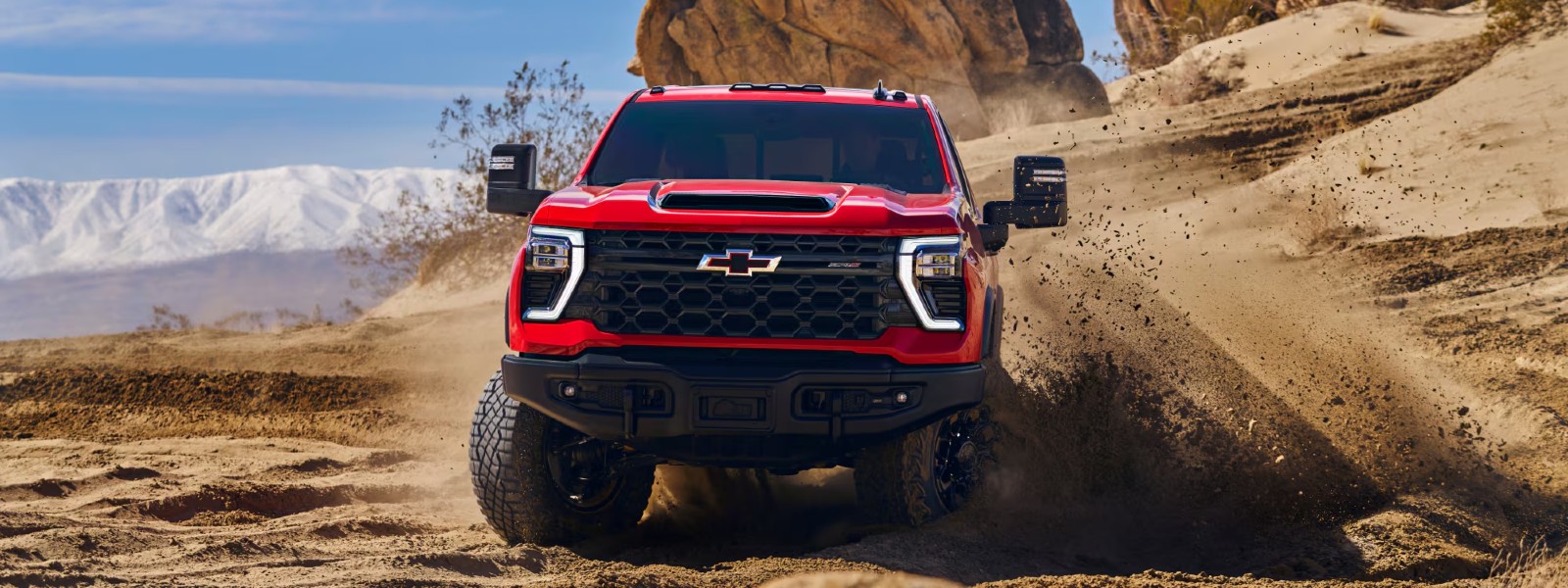
Ask five drivers to explain the difference between AWD, 4WD, and 2WD, and there's a good chance five different answers come back. It's one of those topics that sounds simple until someone actually has to explain it out loud. At Fort Washington Chevrolet in Fort Washington, MD, the AWD vs. 4WD question comes up almost weekly, especially from shoppers cross-shopping a Trailblazer against a Silverado. Here's the plain-language breakdown — no engineering degree required.
Key Takeaways
- AWD works automatically in the background and never needs to be switched on, while 4WD is usually driver-selected for off-road or low-traction situations.
- 2WD sends power to only two wheels, which keeps it the most budget-friendly and fuel-efficient option for everyday commuting.
- The Chevy Equinox and Chevy Traverse offer available Chevy AWD, while trucks like the Chevy Silverado offer true 4WD with low-range gearing.
- There's no single "best" drivetrain — the right pick depends on climate, terrain, towing needs, and how the vehicle gets driven day to day.
- Most drivers who stick to paved roads and light winter weather do just fine with 2WD or AWD, while frequent off-roaders and tow-haulers lean toward 4WD.
What's the Difference Between AWD and 4WD?
AWD sends power to all four wheels automatically, shifting as needed without any driver input, and it's primarily designed for everyday traction in rain, snow, and on uneven pavement. 4WD is typically driver-selectable and built with heavier-duty hardware for off-road use, towing, or low-traction conditions. Both put power to all four wheels — they're just engineered for different kinds of driving.
This is really the heart of the difference between AWD and 4WD conversation, and it comes down to purpose. AWD systems, like the ones in the Chevy Equinox or Chevy Traverse, use sensors to detect wheel slip and shift power on the fly, so drivers never have to think about it. That makes Chevy AWD a solid fit for commuters who deal with rain, light snow, or the occasional gravel driveway but don't need serious off-road hardware. 4WD, on the other hand, shows up on trucks and SUVs built for tougher jobs, like the Chevy Silverado or Chevy Colorado. It typically includes a low-range gear for crawling over rocks or pulling through mud, along with differentials that can send equal power to both wheels on an axle. It's more rugged, but it's built with a different job in mind.

Where Each System Shines
AWD
Rain, light snow, everyday commuting, and mixed-condition roads.
4WD
Off-roading, deep snow, towing, and severe low-traction terrain.
Both (AWD & 4WD)
Noticeably better grip and control than a standard 2WD setup.
What's the 2WD vs. 4WD Difference, and How Do I Know Which One I Have?
2WD sends engine power to just two wheels, either the front or the rear, while 4WD sends power to all four. The easiest way to tell which one's under the vehicle is by checking the trim badge, the window sticker, or the transfer case dial or button on the dashboard.
The core 2WD vs. 4WD difference boils down to how many wheels are doing the work. A 2WD Chevy Silverado, for example, is lighter and easier on fuel, since it isn't hauling around extra drivetrain components. For anyone wondering "How do I know if my car is 2WD or 4WD?" a few quick checks usually settle it: look at the rear badge or trim name, since many 4WD trims say so directly, check the owner's manual or window sticker, or look for a dash-mounted 4WD selector switch. Some Chevy SUVs also display a small drivetrain icon on the instrument cluster once the system engages. If none of that's handy, a quick VIN lookup at Fort Washington Chevrolet's service desk will confirm it in a couple of minutes.
Comparing AWD, 4WD, and 2WD at a Glance
This table helps customers compare key factors side by side before deciding which drivetrain best fits their driving habits.
| Drivetrain | Best For | Fuel Efficiency | Example Chevy Model |
|---|---|---|---|
| AWD | Every day driving in rain and snow | Good | Chevy Equinox |
| 4WD | Off-roading, towing, deep snow | Fair | Chevy Silverado |
| 2WD | Budget-friendly daily commuting | Best | Chevy Trax |
Which Is Better — 2WD, 4WD, or AWD?
There's no universal winner — the best drivetrain depends on climate, terrain, and driving habits. Drivers who stick to paved roads and occasional weather do fine with 2WD or AWD, while those who tow, off-road, or drive through heavy snow benefit more from 4WD.
Which is better, 2WD, 4WD, or AWD? It really depends on the question behind the question. If budget and fuel economy matter most, 2WD is hard to beat for daily commuting. If year-round confidence in unpredictable weather is the priority, Chevy AWD strikes a nice middle ground since it's low-maintenance and works automatically. A common follow-up is whether "Can I drive in AWD all the time?" — and the answer is yes, since that's exactly how it's designed to be used. Unlike older 4WD systems that shouldn't stay engaged on dry pavement, AWD is built to run full-time without added wear. For shoppers comparing FWD vs. AWD, the biggest difference is simply how many wheels get power under normal conditions: FWD relies on the front two, while AWD can shift power to the rear when extra grip is needed.
Wrapping Up the Drivetrain Debate
Understanding AWD, 4WD, and 2WD doesn't have to feel like homework. Once the basic differences click, picking the right setup comes down to being honest about how and where a vehicle actually gets driven. If you still don't know which drivetrain fits your daily driving habits, stopping by Fort Washington Chevrolet is an easy next step. Our sales team can walk through available AWD and 4WD trims side by side, and our service department can confirm which system is already under the hood of a current vehicle.

FAQ
Does AWD work as well as 4WD in snow?
AWD handles light-to-moderate snow well since it reacts automatically to wheel slip, but 4WD with low-range gearing is generally the better choice for deep or sustained snow and ice.
Is 4WD more expensive to maintain than AWD?
Generally, yes, since 4WD systems include additional hardware, such as transfer cases and locking differentials, that require periodic service.
What does the Chevy Traverse 4-wheel drive button do?
The Chevy Traverse 4-wheel-drive button lets drivers manually engage additional all-wheel traction in slippery or uneven conditions, rather than relying solely on automatic engagement.
Can 2WD vehicles handle winter driving?
With good winter tires, 2WD vehicles can manage light snow, though they generally offer less traction than AWD or 4WD models in icy or deep-snow conditions.
Does AWD hurt gas mileage?
AWD systems typically use slightly more fuel than 2WD due to added weight and extra drivetrain components, though the difference is usually modest on newer Chevy models.
Visit Fort Washington Chevrolet
- Monday 9:00 AM - 8:00 PM
- Tuesday 9:00 AM - 8:00 PM
- Wednesday 9:00 AM - 8:00 PM
- Thursday 9:00 AM - 8:00 PM
- Friday 9:00 AM - 8:00 PM
- Saturday 9:00 AM - 6:00 PM
- Sunday Closed
Stop by our showroom or contact us today to learn more about our current inventory and financing options.